Diagnosing Root Cause Across Services, Infrastructure, and Recent Change
A platform team's mean time to diagnosis is dominated by the search for what changed, across deployments, configuration, and infrastructure.
Run on Sutradhar · Agentic IT Operations

Change data lives in deployment pipelines, configuration systems, and cloud audit logs that are never correlated.
Timeline Reconstruction → Change Correlation → Hypothesis Testing → Prior Incident Matching
Incident timelines assembled automatically rather than reconstructed under pressure.
The challenge
Change data lives in deployment pipelines, configuration systems, and cloud audit logs that are never correlated.
Engineers reconstruct a timeline by hand under incident pressure.
The same class of incident is re-diagnosed from scratch each time it recurs.
How our team solved it, with Sutradhar
- 01
Timeline Reconstruction
Sutradhar assembles deployments, configuration changes, infrastructure events, and alerts into one ordered timeline automatically.
- 02
Change Correlation
Changes are correlated against the onset of symptoms to produce ranked candidate causes.
- 03
Hypothesis Testing
Candidate causes are tested against available telemetry rather than presented as a list to read.
- 04
Prior Incident Matching
Similar past incidents and their resolutions are surfaced alongside the current diagnosis.
- 05
Engineer Decision
The on-call engineer receives a reasoned diagnosis with its supporting evidence and decides whether to accept it and act.
The outcome
- Change data lives in deployment pipelines, configuration systems, and cloud audit logs that are never correlated.
- Engineers reconstruct a timeline by hand under incident pressure.
- The same class of incident is re-diagnosed from scratch each time it recurs.
- Incident timelines assembled automatically rather than reconstructed under pressure.
- Candidate causes ranked and tested rather than listed.
- Recurring incident classes resolved against prior diagnosis instead of from scratch.
Delivered for a client; the client name is withheld under NDA. References are available on request.
Capabilities used
Every accelerator is assembled from the same capability layer, so a workflow you adopt here shares its foundation with the rest of the portfolio.
Run on Sutradhar
Watch Sutradhar run, end to end, in a few minutes.
Agents that cut the alert noise, find the cause, and fix what is safe to fix.
See the Sutradhar acceleratorMore from Sutradhar
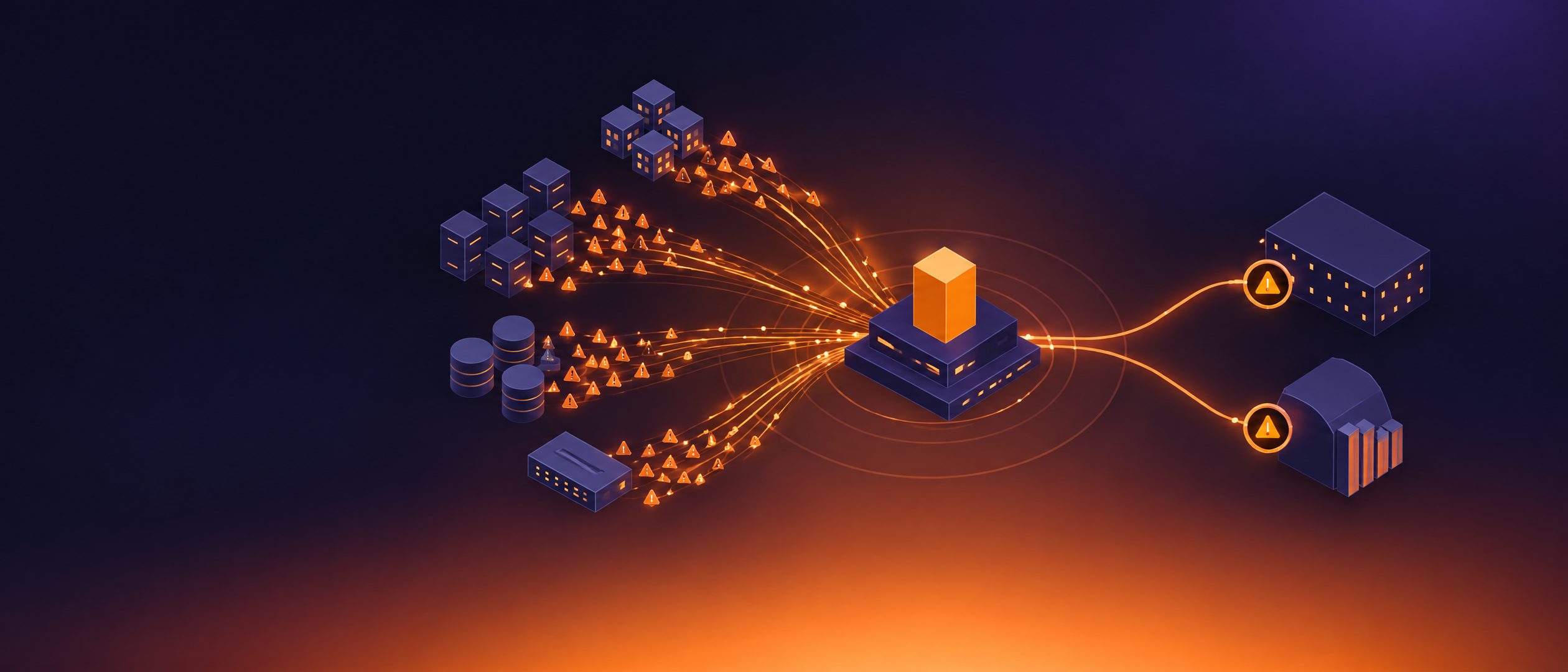
Collapsing Alert Storms into the Incidents That Are Actually Happening
An enterprise operations centre receives tens of thousands of monitoring alerts a week across infrastructure, applications, and network.
Read the use case
Executing Safe Remediations While Escalating Anything with Blast Radius
An operations team performs the same routine remediations weekly - restarts, cache clears, capacity adjustments - by hand, at all hours.
Read the use case
Reporting Operational Health to Leadership Without a Manual Pack
An IT leadership team receives a monthly operations pack assembled by hand from six systems, arriving three weeks after the period it describes.
Read the use caseBring us the version of this that you actually have.
Every engagement is fixed in scope and milestone-gated. The scoping conversation starts with your systems, not with a template.